Showing posts with label WoW. Show all posts

Sunday, May 8, 2016

A note on WoW and Nostalrius

I've written before of my increasing dissatisfaction with the direction that Blizzard took WoW with each expansion. At one point I started making a list of all of the RPG and flavour elements that I had liked, more and more of which Blizzard systematically removed from the game with each expansion. I even witnessed the removal of some of it, as I was trying out some of the Cataclysm content with a free starter account at the time when the Mists of Pandaria expansion was released and forcibly applied to my installation. It is no exaggeration to say that the game in its current state is a very different game than the one I paid for in 2007.

I write today, a month after the shutdown of the private server Nostalrius, not to lament the loss of a functioning preservation of the game as it was in 2006, but to address an argument that I've seen parroted unchallenged in many places.
"People who played on Nostalrius weren't there because they preferred vanilla, but because it was free."
I don't understand how this claim continues to be repeated, when it doesn't stand up to even the most casual of scrutiny. There are many private servers maintained by fans, and they represent a wide range of preferences. Some focus on specific expansions, while others include the most current content. Some focus on PvP, and have little care for quests. By far, the majority of them feature accelerated leveling, accelerated gold and skill gains, and overpowered gear, and are intended as playgrounds (small wonder, considering faithful recreation of the quests and scripting takes a great deal of effort). A minority strive to be "Blizzlike", with quests, leveling, and content as close to the source as possible.

Nostalrius was a vanilla Blizzlike 1x server with no accelerated leveling and no special bonuses, made to resemble WoW as it was as closely as possible, and it existed in a sea of servers that support Burning Crusade, Wrath of the Lich King, Cataclysm, Mists of Pandaria, and yes, even Warlords of Draenor. If people were only playing on a private server because it was free, why did they specifically pick a vanilla server instead of the "latest and greatest" of the expansions?

Obviously, they weren't playing there because it was free. The reasonable conclusion is that they were playing there because they preferred vanilla.

Wednesday, August 29, 2012

The Privation of WoW

Since the Starter Edition came out for World of Warcraft, being an unlimited free trial with a cap of level 20, I occasionally drop in and play the post-cataclysm low-level quest content that was all new to me, or try different races and classes.

I typed up all my experiences and impressions of that content, but never finished the article or uploaded it here. The basic summary is that they had stripped the gameplay and the leveling experience of at least half of its previous depth. Perhaps in the future I'll explain why I feel that way.

Now, with the new expansion Mists of Pandaria, Blizzard opened up the goblin and worgen playable races to the Starter Edition, enabling me to create a new character of each of those races and experience their unique 1-10 leveling zones.

In so doing, however, despite the new (to me) content to experience, I found that they've removed even more gameplay, depth, and immersion from the game.

At one time, you got to know your choice of class through interactions with your class trainer and class-specific quests, which provided a grounding in what it means to be whatever class you chose. New abilities were given as rewards for going through certain rituals or rites of passage, and class quests would send you out to assemble unique items perfectly suited to your class, which taught you what kind of gear you should be looking for in the future, though these class quest rewards were often so good, you'd be using them for the next 10 levels before you could find anything better.

In general, class quests were integrated into the questing experience at least all the way up to level 55 (pretty much the end of the vanilla game), when every class was funneled into the Sunken Temple for their class quests, so really, you could go through the entire game and experience new content all the way through just by picking a different class. They really made classes feel distinct and interesting, with plenty of backstory.

Cataclysm removed most of the class quests. What previously was a reward for a chain of interesting quests was turned into something you just pay to learn at a trainer. If you didn't play it before, you'll never experience the flavour that used to give it meaning.

They also removed most of the class-specific items. Warlocks don't really need soul shards anymore. Hunters don't need ammunition or pet food. Rogues don't need to brew their own poisons.

Okay, so that's all just a little summary of a couple of the small things that were changed in Cataclysm (instead of the long unfinished article on that and many other things), as a lead-up to what I've just experienced in the changes brought by Mists of Pandaria.

The biggest thing is that now, in MoP, they give you all your class abilities automatically, for free, with no training. Trainers are now nothing more than providers of basic information and respecs. The last tenuous connection to that old sense of involvement in the game world is now broken. I no longer feel like I'm a part of something, at all.

Moreover, what was previously a gold sink is now gone. What am I supposed to do with all this gold, now that I don't have to pay for talents or class-related materials?

Really, the only vestige of what class quests used to be is now only to be found in the repeatable quests for cooking and fishing. There are 5 randomly-assigned daily quests in each major city for each of those professions that send you off to do things related to that profession, with the quest text providing some feeling of being a cook or a fisher in that world, and giving quest rewards related to that profession. That's fun! And it's a shame the classes have had that sort of thing taken away from them.

Friday, March 16, 2012

More NWN2 modding

I decided some time ago that I would make an adventure module for Neverwinter Nights, after my earlier Dragon Age: Origins quest mod experiment. I just can't really start on it until I have a decent-sized block of time I can spend on it, and I expect that will be this summer. In the meantime, I've been tinkering, reading the forums, and browsing the Vault's script repository, to determine what can be done in this toolset. From that, I'll decide what will be done.

For my first venture in NWN2 questmaking, I elected to begin with something relatively limited in scope. Any first work with a new set of tools should be small, in my opinion. As a learning experience, a smaller scope can prevent constant revisionism as one's skill and experience grows, by enabling the project to be completed quickly enough that such desires don't have time to develop.

That said, I intend for this to be the kind of module that I myself enjoy playing, and I'll judge my success or failure by how well I accomplish this.

Trouble In Rainesfere took two weeks to complete, not counting the viewing of the toolset tutorial videos that inspired me to create it in the first place. As with that module, I'll document my experience of learning the toolset and making a module, from my perspective as a beginner, which I hope will serve to inspire other beginners to give it a try if they haven't already. I'll allocate 3 weeks for this one, plus another week's worth of research and contingency time interspersed within.

This should be more than enough time, since, unlike with TiR, I will not be designing all of the areas myself. Having browsed through many of the prefab areas designed by other NWN2 players and modders, I was impressed with all of the fine quality work available, waiting to be used by other builders in modules. I don't know which ones have or haven't yet seen such use, but I can certainly do my part to showcase a few. It will save me some time as well, even though landscape design is one of the parts of modding that I find most enjoyable.

In addition, I've opted to adapt a pen & paper module for this project, which will save me some time in creating a design document. It's rather bare bones, and doesn't even include any sample conversations, or NPC builds aside from the main antagonists, so it'll require a bit of embellishment. My aim is to include everything described within, with encounters that have multiple approaches based on player choice and party skills.

Other mods in the meantime

Before I get into that module, I'm just taking whatever free time I can spare and feeling my way around the toolset and the game files, and making some minor cosmetic mods like some "beautiful people" heads for a few of the races, including humans, elves (including drow), half-elves, and halflings. The drow still needs some work in the eyebrows. I had some trouble with the specular maps, but got them to behave well enough.

I just finished something else, though, which I had been wanting to try for a long time in various games. After playing around with some visual effect mods, I had a basis for understanding how to use the Visual Effect Editor. So, after determining that it should be possible, I hacked together the parts I needed to create a DA:O/WoW-style system of quest indicators for NPCs, to make it easy to see at a glance whether someone has a quest available, and whether the conditions have been satisfied to complete it. Such indicators are especially useful in cases where an NPC may not have anything to say until certain conditions are met, or when an NPC you've spoken to before may have something else to say later, which you might miss if you have no reason to think the NPC has something new to say.

I know some people don't like visual gameplay elements in the 3D world for various reasons, but I intend my module to be an enjoyable game, and not an immersive cinematic experience. My module will contain no voiced dialogue, and what few cutscenes I plan to employ will be brief and for the purpose of calling attention to important events or points of interest during the gameplay. Cutscenes take control away from the player, and thus should be employed as minimally as possible.

In the NWN2 OC, they tended to use triggers to ensure that the player didn't miss some available conversation. If you walked anywhere near the NPC, your main character would be forced into conversation or a cutscene. I didn't like that. It was especially egregious during one time in the courtyard of Crossroad Keep when I was trying to walk over to the boy so he could teleport me out to the world map marker, and I was instead intercepted by the Luskan ambassador, and Sand brushed him off and force-teleported me inside the keep, where I didn't want to go!

I'm also going to try to find a way to make the game allow you to attack enemies before they become hostile. I hate those situations where you spot your mortal enemy from afar, but are unable to make a preemptive strike against him because the game requires you to walk up and talk to him first.

Anyway, I made the icons and the associated FX files on that first day. I wanted to make a little test quest just to try out and demonstrate the indicators, but of the quest wizard plugins on the Vault, two were database-dependent for persistent worlds, and the other was compiled for a previous version of the toolset. I don't know why plugins broke every time the toolset was updated, but most of them were dutifully recompiled until the final patch. Quest Maker was one of the ones that wasn't. Fortunately enough, the author provided the source code.

I had never touched anything like Visual C# Studio, but if I wanted to compile this plugin so I could try it out, I had to learn. A tutorial informed me that the necessary tools were free, so I installed the software and did everything it said to do, though some bits were harder to follow since the program had different names and locations for commands than the tutorial said.

I had to do some troubleshooting, since I told it to compile the DLL directly into the toolset's plugin folder. This caused the toolset to crash on open, and the reason seemed to be that it had placed a lot of unnecessary files in there. I cleaned them out and recompiled elsewhere, and dropped only the DLL into the plugin folder. It still didn't work!

Finally, my search led me to a forum post, where Marshall of the Legends Plugins had encountered the same problem, and most importantly, where he had reported how he solved the problem. The answer was that it had to be compiled for VB 3.5 instead of the default 4.0. This time it worked. Thanks, Marshall!

Quest indicator success

The next day, I spent maybe 6 hours figuring out how to get the quest indicator system working, and writing a quest to demonstrate it.

I'm still very much working in the dark with this script, and my hacks involve a great deal of trial and error. Getting the exclamation point to appear over the NPC's head was the easier task. Getting it to go away when I wanted to change it to a question mark or remove it entirely was the part that took many hours. I searched through tutorials, reference works, and forum posts, and tried three or four different functions, and changed variables and coding structure, all to no avail.

Additionally, the QuestMaker plugin I compiled yesterday seemed to only work partially. Possibly I did something wrong when I used it. I used it to create an "explore an area" quest so I could easily test the indicator system, but for some reason it didn't actually create the trigger with the code that would advance the quest, so I had to figure out how to script a trigger. I tried using the generic one and applied some variables to the instance, but I apparently did it wrong. I ended up trying out LilacSoul's Script Generator for the first time, and that succeeded. I really wish Marshall's Legends Quest Plugin worked for single-player modules.

Finally, I found a forum post that mentioned a function that I hadn't tried, and that successfully removed the effect from the NPC. Finally, it worked.

The code's not pretty, and it needs a little more work to generalise it, but I can use it in my module as it is now.

A bit more on my choice of quest indicators: It's much like the difference between making every barrel in the city lootable, with most of them empty, or having the barrels with contents stand out from the others somehow (such as by not allowing the empty ones to be opened). This is all about determining who is important to talk to, and who is only there as decoration.

I consulted some friends about their preferences in this regard, and got a reasonable range of responses. One was mildly against them, but thought it would be fine to use them the way I have in mind -- solely to mark the questgiving NPCs, and not to point out anything quest-related on the map. Two were okay with them, as long as they could turn them off, which I should be able to code.

Others were more positive and enthusiastic about them. One brought up how they would have been nice to have in Mass Effect, notably in the between-mission "party camp" on board the Normandy. With the party members being spread out between several decks, and knowing that they would have new things to say on occasions throughout the story, players like them (and me) got tired of running back and forth through the ship and up and down the decks to check each party member, only to get told over and over that they're too busy to chat because they're in the middle of some calibrations.

I've heard other systems proposed, as well. Questgiving NPCs could be distinguished by giving them occasional text barks or gestures to beckon the player to them. I like this idea as well, but I don't think it would work very well in a city environment with a lot of unimportant NPCs walking around, who I also want to have text barks to liven up the place. Of course, I've heard some players don't like text barks at all, and insist it ruins the immersion to see text floating over characters' heads, but all I can say to that is that those players will not enjoy my module.

Questgivers could be the only ones with proper names, with everyone else having names like "Commoner" or "Townsperson". That could work fine, too. I don't prefer it, though, because I don't know of any ways to make NPC names always be visible, rather than having to mouse over them to see the names. I would actually like to have visible names in addition to the quest indicators.

Other, more minor visual indicators are things like having questgivers dress in brighter colours, or wear a special badge or piece of gear, or have them emit a subtle glow, or even have all questgivers share a single appearance!

In any case, I like the exclamation point solution best. Personally, it delights me to walk into a new area and see lots of new quests for me to accept, and I think nothing does that better than the exclamation point!

This of course opens the door to a wider range of visual indicators, such as for merchants, healers, or innkeepers, but I don't know if I want to take it further than just questgivers. Those NPCs tend to be easy enough to recognise as long as they're located in logical locations (such as in a shop, in a temple, or behind a bar), and it would probably be enough just to have their names indicate their role.

Saturday, August 21, 2010

Baldur's Gate, part 1

It was while playing Dragon Age: Origins that I saw much talk of the Baldur's Gate series. I had heard of it many times before, of course, but it wasn't until about four years ago that I developed an interest in RPGs, so I had never played it. The general consensus in all the reviews I've seen is that the Baldur's Gate series (with emphasis on the second one in the series) is the best CRPG of all time. My limited experience with RPGs prevents me from making that statement myself, but if you've read the discussion about it in the comments on the Freespace 2 post from earlier, you can probably tell that I've been enjoying my experience with it.

On the Dragon Age forums, people said that many of the things I liked about Dragon Age were also present in Baldur's Gate, such as the quality of writing, the party banter, romances, and many stylistic elements, among other things. I proceeded to view some Let's Play videos on Youtube to see how it played and how it looked, and it seemed workable, more so with the graphical improvement mods that were shown in action in the videos.

Mods

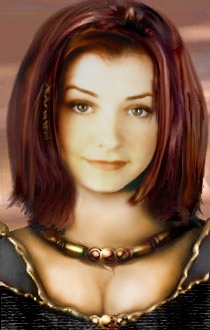
Before I even bought the game, I scoured the net for mod sites, and found Baldur's Gate 1 TuTu (which is read as "Baldur's Gate 1, to 2"), which allows you to play Baldur's Gate 1 in the improved Baldur's Gate 2 version of the game engine. Also I found a mod that allows higher video resolutions with widescreen, and various other mods that add extra banter and such (BG1 NPC Project is the banter one). I also found many alternate character portrait packs, including some that make Imoen look more like Alyson Hannigan than she already did, from her Willow days on Buffy the Vampire Slayer (which premiered the year before BG1 came out, so perhaps the resemblance was intentional). I would eventually make my own portraits, after I had played for a while. But that's skipping ahead.

The purchase

I found a very good deal on the game, in the form of the 4-in-1 DVD box set version, which includes Baldur's Gate 1, its expansion pack Tales of the Sword Coast, Baldur's Gate 2: Shadows of Amn, and its expansion pack Throne of Bhaal. Really, the game is a steal at this price, if you go by the length of entertainment alone.

The packaging is decent enough, as it comes in a single DVD case, although I was disappointed to find that each of the expansions occupied separate CD-ROMs on their own, so it came out to 4 discs, where I think it could have been 2, or 3 at most. Also, the blurb on the back of the case is rather garish and unprofessional looking, and misnames "Tales of the Sword Coast" as "Sword of the Coast."

No printed materials (such as manuals or maps) were included, however each disc comes with PDF manuals for each game, in multiple languages. Not scanned manuals, but with high resolution colour images and live vector text for easy searching and crisp printing. Would have been nice if they also included high resolution maps on the discs as well.

I read about half of the first manual, but these manuals total over 300 pages and are full of charts and graphs and tables, so I have to admit I jumped into playing without being fully informed on how to play. The discs also included trailers for various other games of the time, such as Descent, which are good for a look back at the past (but not as far back as the Angry Video Game Nerd takes you), but viewing the trailers appears to be mandatory upon a successful installation, as I could not find a way to stop them.

First experience

In order to maximise my gameplay experience, I installed both games and both expansion packs right away, and let Tutu (actually EasyTutu) figure out how to put them all together. It took some fiddling to get the high resolution widescreen mod working, but it finally did, and I settled in to play. The starting movie began, but unknown to me, this was the starting movie from Baldur's Gate 2, not 1, so I was treated to several spoilers before I figured out what was going on and stopped it.

Creating my character and picking spells and stats was tiresome and difficult, as I didn't really know what I was doing, and I was impatient to get to playing the actual game. I do have some experience with pen & paper Dungeons & Dragons, but not enough, apparently. I'd sat in and played on several pen & paper campaigns, and even ran a game or two as a GM using an official module. I used to own a few of the source books, as well. That said, it took a lot of time to get acquainted with the spells, armour class, and other things that came straight out of second edition D&D. I still don't understand what a THAC0 is.

I'm not all that familiar with D&D from a lore perspective, either. I suppose it's fortunate enough that these games take place in the Forgotten Realms, since the one D&D novel I've read (The Crystal Shard, Icewind Dale Trilogy #1 by R.A. Salvatore) was in that setting as well, so at least I know about a couple of characters and locations that appear in this game, like Drizzt Do'Urden and the Underdark, but I have to say I'm liking this game a lot better than that book. I'd never read or even heard about the books starring Elminster, so I thought at first that the character that appears in the game was some kind of in-joke based on a member of the Bioware staff.

Anyway, once I did get to the game, my first impressions were very positive, aside from the odd and rather unpleasant-looking paperdoll figure of my character (the one that shows in the inventory screen, to show what you're wearing), which didn't look female at all, and more closely resembled the fiery-haired Ford Prefect from the comic book version of the Hitchhiker's Guide to the Galaxy than a half-elven woman. I found a couple of mods that said they would replace the paperdolls, but there were no screenshots, and they actually said they'd change them to the way they looked in Baldur's Gate 1, which may or may not be an improvement.

Another speech about text vs spoken dialogue in games

This game comes from a more enlightened time, when it was not required that all lines by all characters be voiced, which has the effect of immensely increasing the required disk space for the game, drastically limiting the amount of dialogue, and allowing far fewer dialogue branches. This game does dialogue the same way Morrowind did it, which was to voice only greetings, various battle and action lines, special cutscenes, and catch phrases, with everything else being text. This, in my opinion, is the superior way to handle dialogue in a game.

Games today seem to try to be interactive movies, whereas these kinds of games are more like interactive books (or perhaps interactive comics), where the story is told primarily through text. I like text. I like reading. I like good stories. Movies are all well and good, but I really think we're losing something unique as games keep scaling back the amount of dialogue. Could we ever see something as amusing as Minsc's shaggy-dog story of the retainers of Fyrra Vsevolod in a game with full voice acting?

Taking Bioware as a single example, I would compare Baldur's Gate, Dragon Age, Mass Effect, and the upcoming Dragon Age 2 in the way they handle dialogue. I put Mass Effect in there out of sequence, only because Dragon Age 2 seems to be building on ideas they introduced in Mass Effect. If I were using Bethesda as an example, Morrowind and Oblivion would go in place of Baldur's Gate and Dragon Age, as the effects are pretty much identical. So the evolution of character dialogue seems to go like this:

  1. Baldur's Gate: No voices except for character catch-phrases and special encounters. Long, detailed conversations with many possible responses. Responses were sometimes paragraphs in themselves, allowing you to express a very strong viewpoint. Many races, sub-races, and classes to choose from.
  2. Dragon Age: Voices for everyone except the player character. Three races to choose from, either male or female. Conversations are now a fraction of the length of the ones in Baldur's Gate, but feel longer because I read faster than these people speak their lines. Responses are now limited to 1 or 2 lines of text. Maybe 3 on rare occasions. Responses are assumed to be delivered exactly as worded.
  3. Mass Effect: Voices for everyone, including the player character. Only 1 race to play, male or female. Conversation length is about the same as in Dragon Age, but the responses are not even full lines anymore. Instead, you get a summary of your response, and when you choose one, the character speaks a slightly longer and different response (occasionally not quite what you intended to say).
  4. Dragon Age 2: Like Mass Effect, the player character is also voiced. As a result, unlike in Dragon Age 1, you are limited to a single race. According to reports, the dialogue responses have been simplified even further than in Mass Effect, to the point at which you don't even get a summary of what you'll say, but only a "mood" or general subject. You can still play as male or female, but the way these things are going, I wouldn't be surprised if they eventually offer only a single character choice, opting to drop more and more character customisation and story elements for the sake of the "full voice-over" crap that I don't want!

Do these companies even really care about games anymore, or do they actually want to be making movies instead? Some games sure seem to be going that way (Heavy Rain, the Metal Gear series...)

Large amounts of text are not gamer-bane! Look at WoW, perhaps the most successful video game ever, and it's still going strong with no spoken dialogue aside from little things like the "hello/goodbye" lines they say when you click on them or end a dialogue, and brief lines spoken by bosses during encounters. Blizzard, at least, doesn't seem to be falling into this trap. (Yet?)

Back to talking about Baldur's Gate

The characters are very vivid and memorable. I immediately took a liking to Gorion, the main character's foster father, and Imoen, the cheerful pink-haired thief. I'm not exactly sure which parts of the dialogue are from the original and which are added or enhanced by the NPC Project, but I've read that Imoen had hardly any dialogue interaction in the original game, whereas now she's a real chatterbox. But in a good way.

Some more customisation

As I mentioned earlier, I ended up making some custom portraits for my character. The included portraits were well-made and had an interesting look to them, but there were no portraits that looked like how I'd want to see my character. Most of the fan-made portrait packs attempted to duplicate the style of the original portraits, though there were some that departed from that style and simply used general fantasy art. Well, there's been a lot more fantasy-themed art available online since the time of BG's heydey, and I was able to find plenty that would make a good portrait. However, I ended up finding these great alternate portraits on Deviant Art (and the artist's second version, which include more characters), which were so great I had to go with them. Unfortunately not all characters and companions are included here, so I try to improvise where I can when I come across a new companion that doesn't have one. It's a rather unique style, though, so it's hard to find art that matches it.

Alternatively, there are also some other realistic style portraits that cast celebrities in these character roles. They're scattered in amongst the many other portraits in this gallery, and I couldn't find a grouping that just included the celebrities, but seeing a party including Vin Diesel, Halle Berry, Ed Norton, Sean Connery, Ben Stiller, and many others is very tempting. A lot of them happen to be grouped together on this page in the Fighters category, but don't miss the ones in the other categories.

The portraits are really the only view you have of the characters in the game, so they're very important. The characters' representations that you move around on the game screen are so small and vague, you can only make out a basic body shape and colours of their clothes (which you can adjust to your liking in the character profile pages), and the aforementioned paperdolls are extremely abstract. For these portrait changes, I used Shadowkeeper, a nice little tool for handling BG saved games.

After this rather clumsy introduction, I should get into the actual gameplay and strategies I've been using, and my opinions of various characters and encounters which I've experienced so far. I'm going to have to split this off into another post, though, so stay tuned.

Saturday, April 24, 2010

Allods Online

I'm still playing Dragon Age when I get the chance, but in the meantime I've also been playing another MMO -- one that satisfies the craving for World of Warcraft that I sometimes get. It's been more than a year since I've played WoW, and I've missed it sometimes, but it's just too much of an investment of time and/or money, with that recurring monthly fee. Other than that, it's almost exactly what I want out of an MMO.

And that's why Allods Online scratches that itch. As far as the WoW-receptors in my brain are concerned, it is WoW. The gameplay, art design, and class types are virtually identical. It basically feels like a whole new expansion to WoW, with new lands, factions, and races with a Russian feel to them (since it's made by a Russian company). And, unlike WoW, there's no monthly fee to play. It also doesn't have WoW's huge addon/mod collection, but I see a few mods here on Curse Forge.

But first, a little about other games, for the sake of comparison. I've played a couple of other free-to-play games, which make their money through selling items in-game for real-world cash, like Free Realms (which I reviewed before) and Soul of the Ultimate Nation, and both seemed like perfectly good games in their own rights, but neither held my interest long enough to want to consider a real-world monetary investment in them. Both were visually attractive, but SUN suffered in its interface and insufficient in-game tutorial, and Free Realms was perhaps a little too watered down and kiddified, both in content and atmosphere. I had already complained about the ridiculous chat filter, but I never mentioned the root beer. There's a town where the half of the chug population that are lazy instead of militaristic have a perpetual Oktoberfest, where they brew and serve root beer. That's not the problem in itself, but that they apparently were so afraid that people might think it was actual alcoholic beer if it had any colour at all, they instead made it look like water. A frothy mug of water. And this isn't even some special other-world root beer, it's actual root beer made with sarsaparilla root, just like classic root beer, which is most assuredly not clear.

All this background about other games is to lead into my impression of Allods.

The game is well-made, colourful, full of quests and interesting landscapes and architecture, nice special effects, and a logical, easy-to-learn interface and combat/skill system (of course, if you're familiar with WoW, then there's not much you need to learn). Your character begins in a beginner's special instance, which acts as a tutorial before you're sent to the starter's area with other live players. You can turn off the tutorial messages, which is nice.

There are two warring factions, like WoW, with faction-only zones and some PvP contested zones, and the races are pretty distinctly different, though there seem to be only three races for each faction. Interestingly, though the Empire seems to be the evil faction, with their orcs and their Soviet/Nazi theme, the League isn't all sweetness and light either, because they have the elves, which resemble the WoW blood elves in appearance and sinister, opulent elegance. If you want to play as a warlock/necromancer on the League side, you play as an elf.

Minor downsides to free play

So far, it being a free-to-play game where you pay for special items or services hasn't yet intruded on my gameplay in the way that it did in Free Realms, where many quests, resource nodes, professions, and items were marked as "member-only", and free players can only advance so far in certain professions or questlines before hitting a members-only brick wall. They made a change a short time ago that made things even worse in my opinion, by allowing users to play all professions, but limiting them all to level 5 unless you become a member.

As far as I can tell, none of that occurs in Allods. All quests have been available for all to play, as of my highest level, (about 75% to max). From what I can tell, the pay items are a matter of convenience or special privilege, rather than things that are necessary to play the game, at least for a rather casual player like me, who doesn't plan to get into any hardcore raiding.

For instance, bag space is limited, and vendors don't sell bags, and tailors can't craft them. The only way to get a bigger bag without visiting the cash shop is through a grind-fest, collecting creature parts with very low random drop rates, from creatures in several zones. While doing this quest, the items will be stuck in your bag until you finish it, because you're not allowed to store them in the bank. This long, boring quest is meant to encourage you to spend a little money in the cash shop to simply buy a bag with real money. But people do complete the bag quest anyway, gaining a lot of XP and salable junk while doing so.

I have not seen any gear items in the cash shop. No weapons, no armour, nothing like that. Mainly just convenience items and consumables.

Level of mature content

The content in the English version has been very mild. The English forum run by the English-version licensed company states that forum content must be "PG-13", and it seems that the game content is about the same level. There is mild swearing, alcohol use, and Victoria's Secret style underwear. What irks me is that I think the content is being somewhat kiddified for the English-speaking audience, because there appears to be more adult-oriented content on the Russian version.

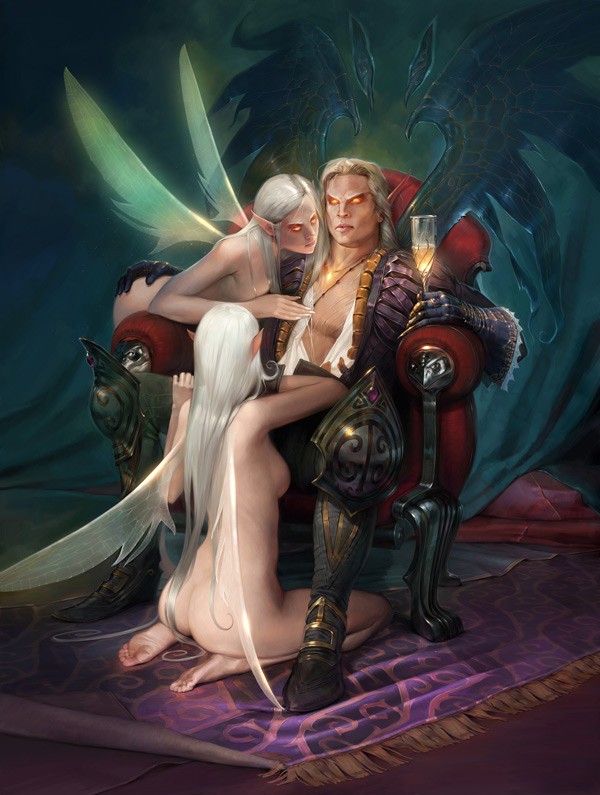
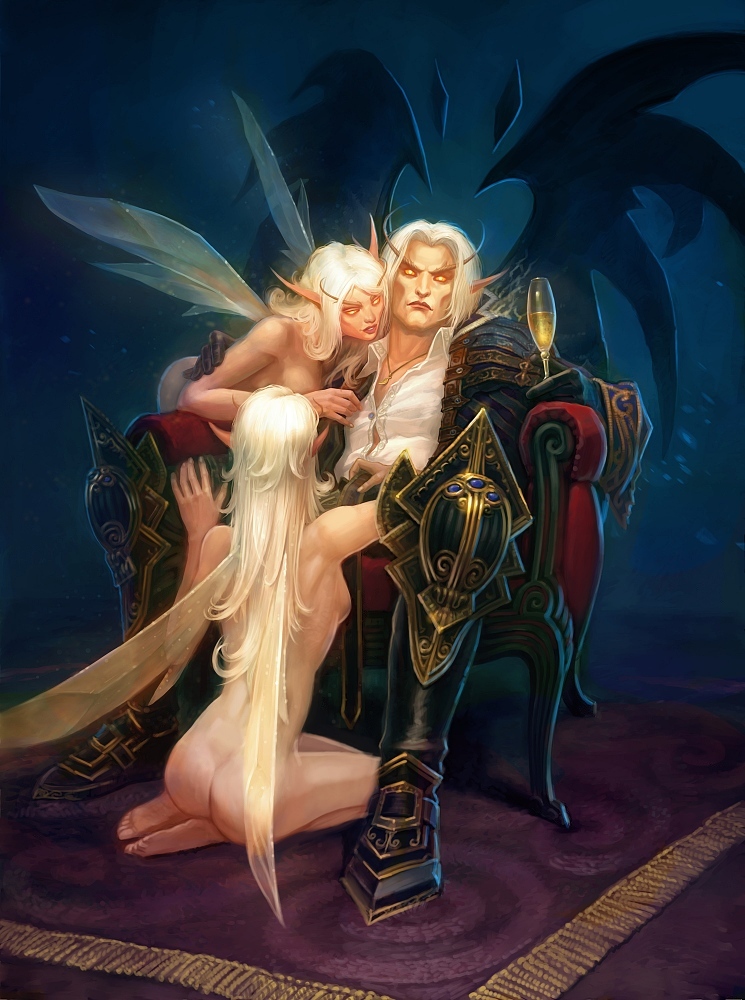
For instance, there is official artwork on the Russian site depicting a seated, rather disinterested-looking male elf with two naked female elves "servicing" him as he gazes off, lost in thought with a glass of wine in his hand. See also here for what looks like an alternate, earlier draft of the same image. Both of these images are used in part on the official web sites.

Secondly, there is a bath house quest, which I've read about, which seems like it would be entertaining and funny, but which appears to be completely excised from the English version. (This is not to be confused with the public sauna which is near the windmill outside Novograd.) The bath house is still in the game, but you can't go in, and the attendant standing in front gives you a blank dialogue box if you talk to him (usually, a message saying "interaction not available" will appear instead of a dialogue box, if they have nothing to say.) This was not even adult material, in my opinion, since even in the baths the characters would not be nude (unless you have the nude patch installed). Nevertheless, considering the average ages of the people I've seen chatting in-game and on the forum (30s, on average), and the age of the average gamer (35, I seem to recall), I see no reason why any adult content should be excised. Keep the kids out, I say, and let us grown-ups have our fun. The world should not be limited to what is suitable for children.

Spammers

One problem is spammers. I encountered spammers hawking their gold-farming web sites as soon as I was out of the tutorial instance, and it was so bad I couldn't see any legitimate chat until I figured out how to add them to my ignore list, so fast were they spamming their messages. WoW definitely has better chat handling features in this regard, where you can just right-click on anyone's name and either block them or report them for spamming. Here, you have to manually enter their names into your ignore list (easiest way at the moment is to click their names once, which starts a whisper message, then click it again, which copies the name into the chat box, where you can highlight it and copy/paste it into the ignore list.)

The nonsensical thing about these spammers, is that this is a game with a cash shop. If we wanted to spend real-world money on in-game items, why buy in-game gold from some irritating spammer when we can just buy items from the cash shop, and sell them in-game on the auction house? Many people do that to make quick gold in the game, in fact, so for those who don't want to visit the cash shop at all, you most likely will never have to.

We could also use some basic filter options, to let us players block any particular words or sequences we want.

Classes

I've tried three classes in this game: Healer, Summoner, and Psionicist. The healer is basically a cleric/priest, the summoner is a warlock, and the psionicist...well, I don't really know what to compare it with.

These classes, from my experience, differ somewhat from their WoW counterparts, but are very comfortable to play. Although there are paladins in the game, the mêlée-specced healer functions more like WoW's ret pally. Healers also get to wear leather at level 10, and plate at level 30. Plate! I've never seen a priest in plate before.

Summoners have the different demon pets, such as the tank and the support-type ones warlocks get in WoW, and they have the DoTs and curses you'd expect, and have a mechanic similar to the soul shard from WoW, which in this case are drops of blood harvested from enemies, which are used in various spells. The biggest difference with Allods' summoner is that it has healing spells. Some, like Plague of Mending, are very powerful group heals. I've heard some say that at the current patch, healing-specced summoners heal better than healers at high levels! I wouldn't know. I go for damage.

As in other games, certain classes are restricted to certain races. Since only gibberlings can be psionicists on the League side (the good guys), I ended up making a human psionicist on the Empire side. The most I can tell about this class is that they're intended mainly for crowd control. But for survivability, I find that the "mental twin" talent is the most useful. This allows you to project an illusion of yourself around your selected target, and the enemy will attack that illusion instead of you, allowing you to unleash damage on your target with impunity unless it destroys the illusion (the game treats the illusion as a "pet", with its own health bar, and it gets hurt more easily than you would).

Starting experience

There is a single, unified starting experience for each faction, which may be a disappointment if you were hoping for a unique starting area for each race, like in WoW. All League players begin in a tower where you won't encounter any other players, and then after the tutorial adventures, you progress to the first small starting island with other players, where you can get acquainted with quest hubs and group quests. Empire players start on board an astral ship, as a newbie recruit in the Empire's compulsory military service (note the short-skirted sailor suits that are Empire military standard uniform for girls). This is the only opportunity anyone gets to see the ship to ship combat and giant astral raid bosses that are a major part of the end-game content, until your guild manages to build a ship to sail the astral. After this, you make your way through petty internal politics and governmental red tape until you reach the first sewer areas where you meet other players, and do the sort of thing the League players do, just in different surroundings.

Both factions, at the end of this, end up in their respective capital cities, where you get access to the mail system, the bank, and the auction house, and get to pick up a profession to make money. It seems to me that the League starting area was much longer and more interesting, and the Empire boots you out into the capital much sooner. You also stay within the Empire capital much longer than you stay in the League capital zone, because the Empire city is a huge megalopolis, whereas the League capital is a modest kingdom, and most of the quests are out in the surrounding forest.

The Empire city aesthetic makes me think of 1940s or 1950s eastern European, with its apartments, cafeterias with refrigerators, wood-paneled auction house, and heavy industrial power plants with smokestacks. The League areas, on the other hand, have very much a fantasy aesthetic. I prefer the League by a long shot, but Empire is nice for a change of pace now and then, as long as I don't mind feeling like an oppressed citizen of a totalitarian state.

All in all, I highly recommend this game if you like WoW, and want to try a free alternative. You'll get a bonus if you like PvP, as there are no PvE servers, and the higher-level zones start turning on your PvP flag against your will. For me, that signals the time to play another game. Your mileage may vary, and you'll certainly enjoy the first 25 levels out of 40, if nothing else.


A repeatable quest where you turn into a werewolf to hunt down sparkling "Twilight Vampires"... Hmm...

Some more random screenies

Wednesday, June 10, 2009

Day 21: Vampires, oddities, huge dungeons, clothes

I don't know how long I searched for the sewer system under Balmora Expansion. I could have just opened the mod in the construction set, but I ended up finding it thanks to a user's helpful tip on Planet Elder Scrolls. There are actually three entrances to the Undercity that I know of now, but one's hard to find. I only saw it once, when I left through it, and I couldn't find it again afterwards (it's in the hills outside of Balmora). The easiest one to use is the one in Carnithus' house on the east side of town, but it's only open from dusk 'til dawn, since the Undercity is a settlement of vampires. Another entrance that has no daylight restriction is behind a locked door in Zakothre's General Store, but Zakothre is constantly right there in sight of the door, so you need to be practically invisible to unlock it without getting reported.

I have a problem with a couple of locations in Balmora Expansion and other mods, in which I enter an interior and it's pitch black, and no light spell or night eye has any effect, but I can see fire effects. I'm not sure what causes it, but if I go to other locations for a while, I can usually come back later and the lighting is normal again.

The Undercity is pretty interesting (though not as large or imaginative as the Undercity in WoW), and has a few quests for the non-hostile vampires there, which you don't need to be a vampire to complete, several shops with unique items on a goth or vampire theme, a nightclub that sells some new beverages, and another player home as a quest reward, with a pretty unique design and new textures for it. If you want a dark, evil-looking lair that's not a cave or tomb, this compact but elegant home with black marble columns and vaulted ceilings may be the place for you.

The Undercity is in a section of sewers that are copied from the Mournhold sewers, complete with goblins, but one section has an unusually large concentration of goblins that was a welcome challenge after so much of the usual Morrowind combat being only 1 or 2 enemies at a time.

I'm not a vampire, but I'm planning to become one at some point, to go through some of the quests of one of the clans, because I like quests. I've already killed the leader of one of the three vampire clans as part of a quest, but it's not the clan I would have joined anyway. Just like the Great Houses, there are three vampire clans, each focusing on one of the three playstyles in the game: fighter, thief, and magic-user. The leader I killed was from the Berne clan, the ones who focus on stealth, and I'd be joining the magic-user clan, the Aundae.

In order to get infected, since I'm currently immune to common diseases, I'll have to make a spell, potion, or enchanted item with Weakness to Common Disease, and go fight some vampires of the clan whose bloodline I want to be a part of.

Inconsistent hostiles

Not sure why this happens, or if this is a common thing, but most of the time lately, when I approach NPCs out in the wild or in caves, shrines, etc., they don't turn hostile immediately. I often engage in conversation with them, only to find out that they're Barbarians or Mabrigashes (Ashlander witches), both of which are hostile. Only after a few seconds have passed do they turn hostile. I'm not a stealthy sort, because I like to make sure an NPC is actually hostile before I attack, or I may kill an innocent person, and since there's no colour-coded indicator like in other games (like WoW), this means I have to wait for them to attack me first. I may have to install Fliggerty's Enhanced Detection mod, which includes a spell to "detect enemy", defined as "any creatures or NPCs that are currently hostile towards you, or have fight settings of at least 80, which means they are likely to attack you on sight."

In one case, one of the Dunmer strongholds whose Propylon chamber I teleported to was occupied by a coven of witches. They were all hostile to me except one. She never attacked, so I left her alone. She didn't have unique information or offer any services, but maybe she's a part of some quest somewhere. I thought one thing she said was funny, though (I assume all witches say this) about my trade: "The Temple calls my patrons the bad Daedra, and perhaps they aren't very nice... But I guess I'm not very nice, either." Well, hey, at least you don't attack adventurers on sight! She also offered to teach me something about summonings, but no such topics appeared in her list, so who knows? Maybe that's what she meant about not being very nice. Offering to teach me something, but giving no way to ask her about it.

In another, more bizarre instance, I entered Kagaruhn from the upstairs door after jumping onto the roof, and upon entering I saw what looked like an Ash Ghoul standing in the room down the hall, with his back to me. I snuck up behind him and initiated conversation, and he had some things to say to me (he was one of those one of those named guys, the ones whose first names are all "Dagoth", or else "Dagoth" is some kind of title like "Darth" is in Star Wars), so I thought maybe I was supposed to be talking to him. Except he also had barter and repair options. which I don't think he was supposed to be offering. I checked to see what he had for sale, out of curiosity, and it appeared to be the items I'd expect to find on his dead body after I kill him -- most specifically his heart. I purchased his heart, and he said, "Thank you, come again." Then he attacked me when I stopped talking to him.

Temple quests

A lot of the Temple quests are just "go here and cure this person's disease", but there are some clever and refreshing ones, which require some actual thinking to figure out, like the one in the Puzzle Canal, and the one where you go to Mount Kand and have to answer riddles given by atronachs (though that one you can cheat if you've picked up one of the coloured books of riddles scattered around the game, one of which contains the answers. I didn't have that book with me when I did it, though, so I had to do it the hard way, which I liked better anyway.

The one that I thought was funniest was the pilgrimage to Maar Gan, where you find Darth Maul just standing around in the foyer (actually a dremora -- they all have that red and black horned head style in Morrowind), and if you talk to him, he says, "If you are a pilgrim, read the inscription on the stupid rock." He does this even if you're not on the quest. You see a few of these daedra around the game who are bound to Vivec's service, and are very grumpy and sarcastic about it, which I find amusing.

Main quest interference

Without naming names, so as to avoid spoilers, I was more or less forced to progress further than I'd planned in the main quest, due to reaching the point where certain parties who shall remain nameless become hostile toward you, and refuse to allow you to do their quests. This was despite having held back at the warned "point of no return". The NPC said very clearly "Are you sure you want to do this? You might want to take care of your business with the other party before you accept this action," so I said "No, don't do it yet," and went off to do my business, but they acted like I had accepted it anyway!

Luckily, this period of bad graces is relatively short, once you go off and do a few tasks and meet Lord Vivec, and everything goes back to normal. In my case, I had put the main quest off so long (I was past level 40 and had 51 reputation points by this time), that the "shortcut" option was open to me, in which the Wise Woman expresses concern that I haven't fulfilled the prophecies yet, and that I should go talk to someone in the Temple High Fane. Apparently you can entirely skip the trials involving all the Ashlander tribes and the Great Houses and get sent to Vivec directly. But I ended up doing most of the trials anyway, just because they offered such nice rewards, and because I like quests.

Dungeon crawl mods

I was browsing through some more mod lists, specifically one devoted to mods that add single dungeons to raid and loot, and one caught my eye: Qwert's House of Madness, which boasted a 100-level "randomly generated" dungeon just outside of Hla Oad. 100 levels? Randomly generated? I wondered how that was possible in the game. But what it actually meant was that the dungeon was randomly generated with an external program called GenMod, which is designed to allow quick and easy generation of Morrowind interiors, and saves ESPs to which you can add further detail in the normal construction set.

So Qwert said s/he generated this dungeon to celebrate the release of a new version of this program, and didn't even know what all 100 levels contained. Now normally, I prefer well-designed and carefully crafted environments to explore, but I was well aware that this was not designed for that, so I took it for what it was. This had in mind other hack & slash type RPGs instead, not something you explore and admire, just something very obviously game-y that you hack your way through and loot and pillage. Some of the floor plans really did resemble something you might see in a classic computer game featuring random dungeons like Rogue or Nethack, or maybe a pencil and paper RPG whose focus wasn't on realistic architecture.

It featured many new types of enemy (all monsters, no NPCs), with different abilities and stats, some of which were very tough, like bosses, though all using the stock vanilla Morrowind meshes. It was an interesting change of pace. The levels are absolutely packed with monsters, of all kinds, from kwama workers to skeletons to dwemer centurions and so on and so on. There is also no theme or unifying design to the levels, as all types of containers and furniture appeared side by side together (i.e. a dunmer chest, next to a mine cart, next to a dwemer cabinet, next to an upper class bed, etc.) This random assortment also extended to the architecture itself, as the levels I explored were comprised of Telvanni mushroom interiors, Redoran interiors, and Daedric shrine interiors, though the architecture was consistent within a single level (no mix and match on a single level, in other words).

I worked my way through the first 6 levels of the dungeon, having to exit after every two levels to unload my loot. But the first time I went out and came back, I was very disappointed to find that all the monsters had respawned already. I hacked my way through to the next level doors quickly that time, but the next time I headed out to unload, I stopped by the spellmaker and made a few new spells. I made three new damage spells: absorb health, shock damage, and poison, all between 100-150 damage points over 5-10 seconds, and having the widest possible range (50...feet? Yards? Meters? I'll just say "units"). I also made a 50-unit-wide soul trap spell, and picked up a bunch of empty soul gems that had been gathering dust in one of my bases. The spells worked beautifully, taking out entire roomfuls of monsters at once, and filling up about a dozen soul gems per fight.

It was definitely useful for leveling up my enchanting, as I used the filled gems to recharge some of my magic items I had used in the first couple of levels before I made the spells. But even though these were perfectly valid spells that anyone can make in the vanilla game, they felt a little too overpowered, and removed the challenge from the dungeon, so I probably shouldn't have made them. They'd certainly be far too powerful for a normal Morrowind dungeon or typical encounter, considering how sparsely populated and spread out the NPCs are in them, where you rarely ever fight more than 1 or 2 enemies at a time. The most powerful thing about these wide-range spells is that they don't even need to hit an enemy directly -- I can cast it against a wall or the floor in the middle of a room, and it affects everything within the 50-unit radius. These spells are like going into a bandit lair and just tossing grenades inside, and then going in to loot the bodies. I don't recommend it, as it'll take away the fun. I might still keep the wide-range absorb health spell in reserve for emergencies if I get ganked by a crowd of mobs, because the more mobs that are attacking me, the more health I'm leeching into myself.

The way the House of Madness dungeon is set up, from what I've determined so far, is that level 1 has a door to level 2 and a trapdoor to level 10. I haven't gone down to level 10, but I expect that there's another trapdoor on level 10 leading to level 20, and so on. From what the readme file says, there are also some kind of activators on every 10th level, so you can choose to teleport from the surface directly to any of the levels you flip that switch for, once you've been down there.

Qwert also made another 100-level dungeon called The Undead Dungeons near Seyda Neen. But those turn out to be the smaller of Qwert's dungeons, as it turns out s/he also created The House of 6 Pains, which is 500 levels deep, and The Dwemer Graveyard, a dwarven ruin that's 1000 levels deep!! Unbelievable! And I thought the dungeons in the Oblivion mod The Lost Spires were huge! Why haven't I ever seen a tool like GenMod for Oblivion?

Better Bodies robe fix

So, I never did figure out how to convert the BB dresses and gowns into proper robes. The game just silently exited whenever I tried to run my mod that changed them from "shirts" to "robes". I tried renaming the body parts in NIFskope, and of course I had to make new "body parts" for the NIFs in the construction set, but it wouldn't work, and I don't know why.

On the other hand, I think I might have a faint idea of why these gowns weren't defined as robes in the first place. From some comments that I managed to find after scrounging through ancient search results, it appears that robes, both vanilla and BB, are made to replace the entire upper body (and possibly lower body as well), and for some reason it's not practical to make a robe with a low neckline or bare shoulders, so they had to be defined as shirts.

So, since I really wanted to use these clothes, and using them meant I lost several enchanting slots due to clothing overlapping or covering up what I don't want covered up, or not covering up what I do want covered up, I just made special copies of these gowns in the construction set with multiple enchants built into them -- the same enchantments I purchased or would have purchased on multiple items under normal circumstances.

An effect of this is that those glasses (the ones I hadn't been using because they made my neck disappear) worked properly. Apparantly it was another one of those cover/not cover conflicts with my vanilla attire.

Saturday, May 9, 2009

Day 16: House Telvanni, shrines

As may be implied by the title, I've taken the plunge and joined one of the three Great Houses. I would have done so earlier, I'm sure, if not for the fact that you can only join one in the entire game, and that the decision is irreversible. I also took my time about deciding whether to join the Aldor or Scryer factions in WoW, though I suspect those factions no longer have much impact since WotLK came out.

I imagine most people join House Hlaalu, simply because it's likely to be the first house you ever see, since the main quest directs you to Balmora, their seat of power. Perhaps this is why their faction alignment is so middle-of-the-road, being on friendly terms with the Mages Guild, Imperial Cult, Temple, Fighters Guild, Imperial Legion, and even the Commona Tong, having mild hostility toward the other two houses as well as the Thieves Guild, and having no hated enemies (though they strongly dislike vampires and Ashlanders).

The three Houses, by the analyses I've read, are each oriented to appeal to one of the three basic play styles: thief, magic user, and fighter. Hlaalu, being all about "business", is for thieves, Telvanni is for magic users, and Redoran is for fighters, based on the types of rewards you get, the style of your stronghold, and the types of quests. There's a strange imbalance in the houses' relations with various similar independent guilds, however. Hlaalu has a mild hostility toward the Thieves' Guild (and an alliance with the Cammona Tong, who the Thieves hate), Telvanni is hated enemies with the Mages' Guild, but Redoran is friendly toward the Fighters' Guild. I'd call that a special advantage for people who like to play paladins.

House Telvanni

Anyway, I chose Telvanni, as I had been planning for some time, as is probably obvious from the background texture art of my blog headers. I'm still going to go as far as I can in the Mages' Guild, but I think if there's a conflict, I'll side with the Telvanni. Ranis did not make a good first impression, and even though a reader kindly pointed out that not all of the guild leaders are like that, Archmage Trebonius is a bumbling idiot who can't detect obvious forgeries and gives vague, impossible-seeming quests. I chose Telvanni despite having read that the little exploit that was in the original game has been patched -- the one that lets you also join Hlaalu once you've progressed through the main quest far enough. Well, no matter.

I perceive the Telvanni like the Scryers of WoW (with Redoran being the Aldor, and maybe Hlaalu being goblins?), and I picked the Scryers in WoW, too. Even though I'm generally a good-aligned character, or at least "neutral good", I'm attracted to personal wealth and comfort. My goodness and altruism only really shows at first in how I settle disputes. Only later, when I'm comfortably rich, do I feel free to be generous. So far, the only characters I've killed who didn't attack me first were those "bad people" of the Cammona Tong that Larrius sent me after. I didn't feel good about it, but it fulfilled 3 different quests. Other than that, if they don't attack me, I leave them alone, and if they attack me, but start fleeing for their lives, I let them go.

The Scryers embody two of my ideals: personal comfort and personal learning. House Telvanni seems to be much the same. True, both of them do have a bit of an evil side. Telvanni, for instance, keep slaves, and say things like, "Have you noticed, for all its proclamations about protecting the rights of property and preserving law and order, the imperial legion does little enough to capture and prosecute abolitionists? That's a bit hypocritical, don't you think?" So, I will obviously be keeping a few secrets from my allied factions. The Mages' Guild doesn't need to know that I'm working with House Telvanni, and House Telvanni doesn't need to know that I'm in the Mages' Guild and have been freeing every slave I've found the key for.

Joining up, with a side trip to a money factory

As I'm already Warlock rank in the Mages' Guild, the Telvanni were none too pleased to see me when I headed back to Tel Branora, the only Telvanni-controlled town I'd visited yet, to pick up a Summon Golden Saint spell from Felen Maryon. But I've been putting points into my Personality stat occasionally when I level up, and been working on my speechcraft as well, so it's not a big problem. Bribing is easiest, and still counts to increase speechcraft, conveniently enough.

I couldn't find anyone willing to talk about joining House Telvanni in Tel Branora, though, so I headed to Sadrith Mora, which someone said was the seat of power of House Telvanni, as Balmora is for Hlaalu. I had a hell of a time finding anyone to talk to about it even there. I headed for the two biggest buildings first, assuming those were the best places to start. The first was actually a hotel, with a nice little quest that is better as a moneymaker than something to complete, in my opinion.

There's a haunted room in the Gateway Inn, with a respawning ghost. I soul trapped the ghost on a whim, and to my surprise found that it occupied a grand soul gem, and was worth 56,000 drakes! For something that respawns every time you enter the room and is very easy to kill? And they want me to get to the bottom of why this ghost keeps respawning? Someone's not seeing the forest for the trees here. I can stand there for over a minute letting him hit me, and my health barely drops -- he's good for training my block and armour skills that way. For comparison, winged twilights are a lot harder to kill (for me anyway -- they tend to kill me in one hit) and their trapped souls aren't worth that much more (60,000 drakes). Considering the empty gems only cost 200 drakes, I consider this to be a wise investment. I'll save the Golden Saint and Winged Twilight souls for enchanting (they're the only ones that allow constant effect enchantments), and use these Gateway Haunt souls for when I need a little extra cash. I guess it's a good thing that I never reset Creeper's inventory, as I had a lot of stuff to buy back from him to actually get the full value of the soul gem.

So, after also purchasing some hospitality papers from Angaredhel, just to make things nice and legal, even though other characters advised me that they weren't necessary as long as I stay out of trouble, I went to the biggest building in town, which is where they said Master Neloth lives, apparently the head of town. The man wouldn't even talk to me, his disposition was so low, so I had to cast a charm spell on him just so I could give him a bribe. But regardless, there was still no option to join the house, so I investigated the whole tower looking for this spokesperson of his (or "Mouth" as they like to call them). One interesting thing about House Telvanni is that they intentionally omitted stairs or ramps for some areas of their towers, reasoning that only people with the ability to levitate should have any business going up there anyway.

Where the hell are they?

I didn't find the aforementioned Mouth in that building, so I went looking for what my journal described as a "council" building. It was difficult to find, because it was much smaller than I was expecting, and all the way on the far edge of town. It was much bigger on the inside, most of it being underground, hence the deceptively small exterior. Unfortunately, I picked the wrong door to look in first, and ended up going deep, deep underground, and as I later found, the councillors are in the first door in front of you as you enter. Nevertheless, at the bottom of an aptly-named "hermitage" in the bowels of this tower, I found a woman who actually had the "join" topic. Yay! I saw her disposition shoot way up when I joined, and everyone in town was nicer to me after that. Amusingly, one of the priests of the Imperial cult outside the hermitage first complained about the "cramped, dark" accommodations the Telvanni had given to them, and then was rather sarcastically obsequious to me after learning that I was a member of House Telvanni. Rather ungrateful, I thought. Didn't look cramped to me, and I hear candles and torches work wonders for lighting up a place.

I found the councillors (well, the Mouths for the councillors actually -- the ones I was supposed to get the join topic from) after I went back upstairs, and they were all conveniently in one place, allowing me to pick up five House quests at once. One of them I could complete immediately, as it was a simple request of fetching a few muck samples, which I already had on me thanks to my hobby as a herbalist/alchemist.

West Bitter Coast

I was quite pleased and excited about these new Telvanni doors opening in front of me, but before I got too deeply into them, I wanted to take care of a couple of things back in Balmora, and ended up going on a long excursion. Firstly, I headed to the Hlaalu council building and reported that I had found and dealt with the murderer of Ralen Hlaalo, and the Nileno Dorvayn was puzzled, but pleasantly surprised that a Telvanni would do such a thing. She paid me 1000 drakes, and said that she'd make a point of letting the Hlaalu councillors know of my deed. I don't know what effect that may actually have on our relations, if any.

After that, I headed west, back to the Bitter Coast, to check on two things -- a highwayman that Larrius Varro had asked me to do something about, and a khajiit that Sugar-Lips Habasi of the Thieves' Guild had told me to retrieve some dwarven artifacts from. I could have just brought her some of my table decorations, but I decided to take the scenic route.

So I ended up in Hla Oad, where the khajiit was staying, and found some interesting secrets in that tiny fishing village. I'd recommend checking it out. The guy denied having any dwarven artifacts, so I checked back in with Sugar-Lips, who assured me he was lying, and spent a while trying to open his locked chest while not being seen by either him or the publican. Was tricky, and took a lot of chameleon spells and enchanted gear to pull it off.

Then, as I could see some more daedric shrines near the village, I went off exploring. As I went to get a better look at one, I happened to find that highwayman Varro had told me about, and he was almost as roundabout as Varro in demanding money from me. When he attacked, he was of the opinion that I "should have picked an easier opponent", apparently not having noticed me killing a nix hound that had attacked as I approached him.

Daedric shrines

This map that comes with the game is very handy in finding locations. Those little Xs in the water show locations of notable sunken points of interest, such as shipwrecks. What I couldn't tell from the map was that this area contained not one, but four daedric shrines, one of which is located underwater at one of those Xs on the map, and is the source of a daedric quest like you see in Oblivion. I investigated all of the shrines (all of which are reddish, and not a Lovecraftian "grey-green" as NPCs tell you. The angles are appropriately strange, though), and obtained a large amount of excellent loot, including a glass shield (raises my armour level just by having it equipped, regardless of whether I block with it) and a glass jinkblade. Now there are three weapons that I'm carrying around all the time, for their useful enchantments. I just need to find a shortblade trainer so I can hit more often with them.

A strange thing that occurred is that in two of these shrines, certain occupants didn't attack me immediately, so I went up and spoke with them a bit, finding nothing special in their dialogue and a reasonable disposition, but a few seconds later they seemed to "wake up" and notice me, and attacked. One of them actually offered training in some disciplines, and continued to offer it even after attacking me -- she gave up the fight and started fleeing, and I stopped my attacks, and as long as I could catch up with her I could talk to her and obtain some training from her.

Golden Saints

I hit level 19 while I was investigating these places, and suddenly I'm seeing Golden Saints at these daedric shrines, which is very convenient for me, because I can't yet cast the Summon Golden Saint spell that I'd been planning to use to fill my grand soul gems for enchanting purposes. I believe it's because my conjuration skill is too low, because when I use spells and enchanted jewelry to increase my intelligence and conjuration skill, the success percentage estimate rises a bit above zero. So I've been practising conjuration when I have the down time, just summoning an ancestor ghost over and over, which raises the skill very slowly but surely. The Wizard's Staff I picked up at the first daedric shrine I visited is my best friend for dealing with these golden saints and winged twilights, keeping me out of reach of their swords and claws (as they have no ranged attacks), except for the one moment when I have to get close enough to cast soul trap on them. I need to make a ranged version of that spell.

Other attractions

Also in this area is one very small dwarven ruin which contained nothing special, aside from some dwarven spectres whose souls are worth 40,000 drakes. And visible from the second daedric shrine is a large stronghold called Hlormaren, which seemed strangely abandoned despite appearing to be in perfect condition. A small room on the left contained a propylon chamber, which is a dunmer teleportation network which still works despite being completely unattended and apparently attracting no interest from outside parties. There's a free official plugin that adds a quest to gather all the indices for these chambers, which are necessary to allow you to use them, but you can find the indices and use the chambers without the official plugin. It's just that the plugin adds a quest that has you hunt them all down with directions on where to find them, and finally gives you a master index to replace all the separate ones, making it more convenient to use them.

Hlormaren would make an excellent place to live if I didn't already have a modded house, as the occupants are all hostile and so the place is empty once you've gone through it and cleaned out the bandits and slavers. Well, almost empty, as there are two people on the roof who didn't attack me, so I left them alone, and a basement with 3 or 4 slavers who also didn't attack me, even after I set all the slaves free. But that leaves 2 levels of dining rooms and bedrooms with plenty of storage free for any players who like large strongholds. Just bring some candles or torches in to brighten the place up a bit.

Well, that was an incredibly long post. And looking at the locations on the map, I really see how little of the game I've explored so far. I didn't even have any mods to talk about this time, aside from the beautiful tree replacers I already mentioned before that make the Bitter Coast so pretty.